
THE LAST 24 HOURS OF THE MONARCHY IN MAFRA
The transfer and installation of the Court in Mafra, during most of Prince João's regency until he departed for Brazil in 1808, attracted to the town and its region a wide variety of events that destabilised the customary tranquillity of that sort of backwater it had become, thanks to certain circumstances, namely (among others):
• the so-called Mafra conspiracy, hatched in the Ponte de Lima countryside in 1806, aimed at removing King João as Regent and replacing him with Carlota Joaquina, the instigator of the movement;
• the occupation, for approximately six months in 1808-1809, of the Palace of Mafra, the last royal residence before the departure of the Royal Family for Brazil, by a division of Junot's invading army, commanded by Loison, the ill-famed and bloodthirsty Maneta;
• the unconditional adherence to the absolutist ideology, led by Prince Miguel, against the expectations generated by Vintist constitutionalism. The Mafra municipality itself would bear witness to this almost millenarian option in a Representation to the King against the Liberals (27 March 1832), in which the Oath of Ourique and the Dream of Nebuchadnezzar (Prophet Daniel) are evoked.
If the acclamation of King Maria II (October 1833) and the Convention of Évora-Monte (26 May 1834) didn't help to heal the still fresh wounds and their after-effects, they did at least give an unmistakable signal as to the imperative need for moral, social, institutional and political appeasement, which would generate renewed enthusiasm and strengthen inevitable solidarity.
In Mafra, the constitutional regime favoured stability, relative progress and abundance, and the strengthening of affective and close ties with the new power, similar to those parents have with their children.
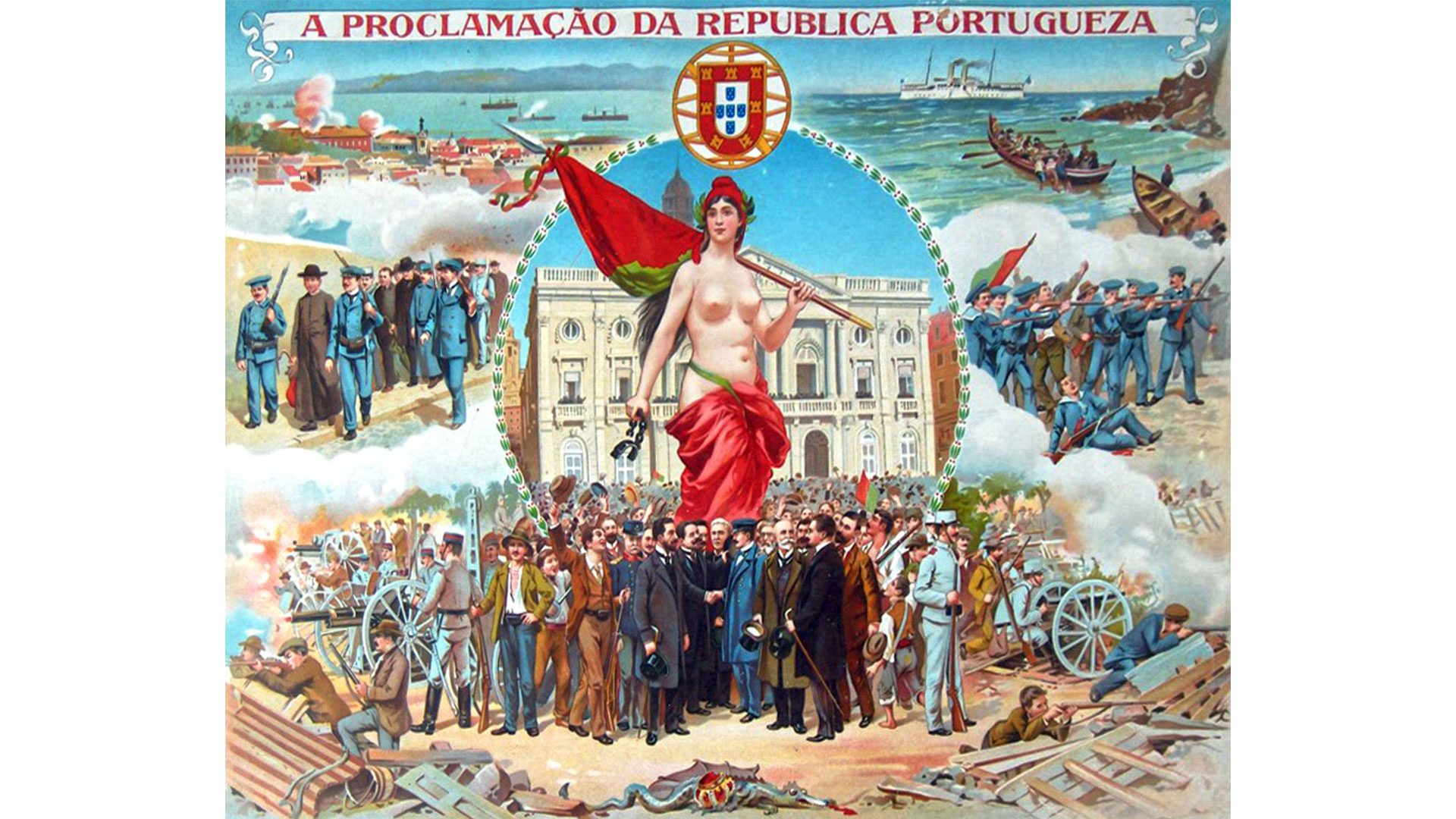
Portuguese Fado wanted, others will point the finger at history, or at the winds that drive it and bear witness to it, that the setting and web of the end of the national monarchy should be the Real Obra de Mafra, of the Magnanimous D. João V, and its stage and mouth the stretch of sandy beach of Praia dos Pescadores in Ericeira, where, on 5 October 1910, the last constitutional monarch took his leave, saying "never again", on board the Bonfim, a boat for him and his dynasty similar to that of Charon.
The National Palace of Mafra and the town of Ericeira were and will remain, indelibly associated with the end of the Portuguese monarchical regime that emerged from the vintist constitutionalism (from the Portuguese word for 20 – vinte) as a result of being the setting for the involuntary abdication of King Manuel II.
However, while the abdication was involuntary, the king's strategic retreat to Mafra on 4 October 1910, when it became clear that a concerted republican insurrection was underway, was undeniably intentional, as this was a territory where the Royal Family and the monarchist ideal had many supporters, and could become a hub for possible resistance.
The departure of the Portuguese Royal Family for exile (at that unforeseen time) in Ericeira could not have been more consensual in any other region of Portugal.
